
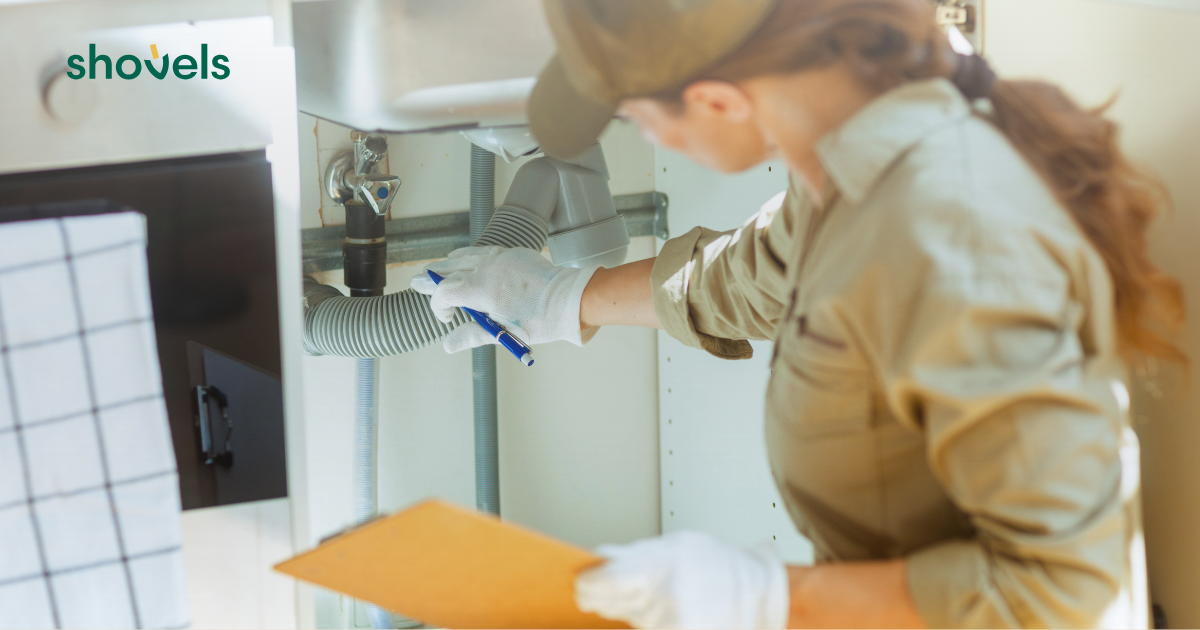

A plumbing permit is an official approval from a city, county, or state to install, replace, or alter water supply, drain, waste, vent, or gas piping in a building. It opens an inspection file so a plumbing inspector can confirm the work meets the adopted plumbing code before pipes are covered or fixtures go into service.
Replacing a water heater, relocating a sink, or running a new gas line? You almost certainly need one.
Key Takeaways
- What it is: Government approval for new or altered piping systems, tied to inspections against the adopted plumbing code (usually the International Plumbing Code or the Uniform Plumbing Code).
- Water heaters count: Most jurisdictions require a permit to replace a water heater, even with the same size and fuel type.
- Who issues it: Usually the city or county. Kentucky issues plumbing permits statewide, and Colorado and Minnesota have state programs for areas without local inspection.
- Who can pull it: Licensed plumbing contractors and, in many jurisdictions, homeowners working on the homes they occupy.
- What it costs: Often under $150 for a single item like a water heater, and a few hundred dollars for remodels priced per fixture.
- How to see it in the data: Shovels classifies plumbing, water heater, and gas permits separately across thousands of jurisdictions, which makes replacement demand visible by market.
What is a plumbing permit?
A plumbing permit is a written authorization from the Authority Having Jurisdiction (AHJ) to perform specific plumbing work at a specific address. The application records the property, the owner, the licensed plumber (or homeowner) doing the work, and the scope, usually as a count of fixtures, appliances, and piping systems.
The permit covers three kinds of systems:
- Water supply: the service line from the meter, distribution piping, and connections to fixtures and appliances
- Drain, waste, and vent (DWV): the piping that carries wastewater out of the building and the vents that keep it flowing
- Fuel gas piping: in many jurisdictions, gas lines fall under the plumbing permit. In others, they are part of a mechanical permit.
Plumbing permits exist because the failures they prevent can be slow and hidden. A poorly vented drain can pull sewer gas into a home. A missing relief valve can turn a water heater into a pressure vessel. A cross-connection can let contaminated water flow back into the public supply. Inspection is the checkpoint before those risks are sealed inside walls or under a slab.
On a remodel or new build, the plumbing permit is usually a trade permit issued alongside the building permit, just like the electrical permit and mechanical permit. For plumbing-only jobs, such as a water heater swap or a sewer line repair, it stands on its own.
When do you need a plumbing permit?
The general rule is that if the work adds, replaces, relocates, or extends piping, or replaces a water heater, it needs a permit. Common examples include:
- Water heater replacement, tank or tankless
- Adding or relocating fixtures, such as moving a sink, adding a bathroom, or relocating a toilet
- Replacing water supply or drain piping, including repiping a house
- Water service and sewer lines between the house and the street
- New gas lines for ranges, dryers, fireplaces, or generators
- Backflow prevention devices on irrigation, fire sprinkler, and commercial systems
- Water softeners and filtration systems connected to the supply piping, in many jurisdictions
Work that typically doesn't need a permit includes clearing clogs, fixing leaks in exposed piping, and replacing faucets or fixtures in the same location without changing the piping behind them. Exemption lists vary, so check the local list before assuming a job is exempt.
Do you need a permit to replace a water heater?
In most jurisdictions, yes. A water heater permit is one of the most common residential plumbing permits, and replacing a unit with the same size and fuel type usually still requires one. The reason is that the safety risks sit with the installation, not the tank itself.

Replacing a water heater usually requires a permit.
Depending on the jurisdiction, the work is filed as a plumbing permit, a mechanical permit, or a combination. A gas water heater may also need a gas piping permit, and switching from gas to a heat pump water heater often needs an electrical permit for the new circuit.
Inspectors typically check:
- Temperature and pressure (T&P) relief valve and a discharge pipe that terminates safely
- Venting and flue connection for gas units, including draft and clearances
- Gas shutoff valve and sediment trap on the supply line
- Expansion tank, where the water system is closed
- Seismic strapping, required in California and other seismic zones
- Combustion air and clearances to combustible materials
Many jurisdictions allow emergency replacements before the permit is issued, as long as the permit is pulled within a short window, often one or two business days. A failed tank on a weekend doesn't have to wait for the permit office to open.
Who issues plumbing permits?
Most plumbing permits come from the city or county building department. A few states and counties work differently, and applying in the wrong place is the most common reason applications stall.
| Jurisdiction | Issuing agency | Where it applies |
|---|---|---|
| Kentucky | Department of Housing, Buildings and Construction, Division of Plumbing | Statewide, through state plumbing inspectors assigned by county |
| Colorado | State Plumbing Board (DORA, Division of Professions and Occupations) | Areas without a local plumbing inspection program |
| Minnesota | Department of Labor and Industry (DLI) | Areas without local code enforcement, plus public buildings and state-licensed facilities |
| Seattle and King County, WA | Public Health, Seattle & King County | Seattle, Clyde Hill, and unincorporated King County |
Seattle is a useful example of how local this gets. Building permits in Seattle come from the city, but plumbing and gas piping permits come from the county health department. Elsewhere in King County, each city issues its own. For a full map of who issues permits where, see our list of US building permit jurisdictions.
Which plumbing code applies?
Most states adopt one of two model codes, then add amendments:
- International Plumbing Code (IPC), published by the International Code Council and used in most states
- Uniform Plumbing Code (UPC), published by IAPMO and used in much of the West
The code name doesn't always say which model it came from. The Los Angeles plumbing code is the California Plumbing Code (based on the UPC) with city amendments. The Minneapolis plumbing code is the statewide Minnesota Plumbing Code, which the city enforces. Kentucky writes its own state plumbing code. The local permit office can tell you which edition is in force.
Who can pull a plumbing permit?
Pulling a permit means applying for it and taking responsibility for ensuring the work passes inspection.
Licensed plumbing contractors pull most plumbing permits. The license number goes on the application, and many jurisdictions require the plumber to be registered with the local permit office.
Homeowners can often pull their own permit. So, can a homeowner pull a plumbing permit? In many places, yes, with conditions. A homeowner plumbing permit is typically limited to the single-family home the applicant owns and lives in, and the homeowner must do the work personally. Kentucky, for example, requires a notarized homeowner affidavit and excludes rental properties. Some jurisdictions exclude gas piping or sewer connections from homeowner permits.
General contractors generally can't pull a plumbing permit unless they also hold a plumbing contractor license. On most projects, the plumbing subcontractor pulls its own trade permit.
How much does a plumbing permit cost?
The cost of a plumbing permit depends on how the jurisdiction prices the work:
- Flat fees for common jobs, such as a water heater replacement, which often cost under $150
- Per-fixture fees, where each sink, toilet, tub, or appliance adds to the total. Remodels priced this way often run a few hundred dollars.
- Valuation-based fees, a percentage of the project value, common for commercial work and in some cities for residential jobs
Expect add-ons for plan review, re-inspections, and records or technology fees. Starting work before the permit is issued often triggers an investigation fee, which in many jurisdictions equals the permit fee.
Water heater permits are one of the clearest replacement signals in permit data. Shovels classifies water heater, plumbing, and gas permits as separate categories across thousands of jurisdictions. See how building materials teams use Shovels, or browse the categories in the Data Dictionary.
How to get a plumbing permit
The steps are similar in most jurisdictions:
- Confirm who issues the permit. Check whether the city, county, health department, or state plumbing program has authority at the address.
- Confirm the work needs a permit. Compare the scope against the local exemption list.
- Decide who will pull it. Hire a licensed plumber, or confirm you qualify for a homeowner permit and complete any affidavit.
- Complete the plumbing permit application. Most applications ask for the address or parcel number, owner and contractor information, a description of the work, and a count of fixtures and appliances. New DWV systems and commercial work may also need a riser diagram or plans.
- Pay the fee and get approved. Permits for water heater swaps and other simple jobs are often issued online or over the counter the same day. Jobs that need plan review take longer.
- Schedule inspections at each required stage, and keep the permit posted at the job site.
- Pass final inspection. The closed permit is the record that the work met code.
What happens during a plumbing permit inspection?
A plumbing permit inspection usually happens in stages, and each stage must be approved before the work is covered.
- Underground: Buried drain, waste, and water service piping is tested before it is backfilled or covered by a slab.
- Rough-in: Piping inside walls and floors is tested before insulation and drywall. A common test is filling the drain system with water or holding about 5 psi of air for 15 minutes with no drop.
- Gas pressure test: New or altered gas piping is pressurized and held to confirm there are no leaks.
- Final: Fixtures and appliances are installed and working, with relief valves, venting, and backflow protection in place.
For a water heater replacement, the rough-in stage usually doesn't apply, and passing a single final inspection (plus a flue or gas test for gas units) closes the permit. If the work fails, the inspector issues a correction notice and the permit holder schedules a re-inspection.
🔎 Want to see whether a property's water heater, repipe, or sewer work was permitted? Look up any address in the Shovels permit database, or create a free Shovels Online account to see full permit history.
Frequently Asked Questions
- What plumbing work can be done without a permit?
-
Most jurisdictions exempt minor repairs: clearing clogs, fixing leaks in exposed pipes or traps, and replacing faucets, showerheads, or fixtures in the same location without altering the piping. Anything that adds, relocates, or replaces concealed piping, or replaces a water heater, typically needs a permit. Check the local exemption list, because the lines differ between jurisdictions.
- Do I need a permit to replace a toilet?
-
Usually not, if the new toilet goes in the same spot and connects to the existing drain and supply. Moving a toilet, adding one, or replacing the closet flange and drain piping below it typically requires a plumbing permit.
- Do I need a permit for a gas line?
-
Yes. A gas line permit is required almost everywhere to install, extend, or alter fuel gas piping, and the work usually must pass a pressure test. Depending on the jurisdiction, gas piping is covered by a plumbing permit, a mechanical permit, or a separate gas permit.
- What is a backflow permit?
-
A backflow permit covers installing or replacing a backflow prevention assembly, which keeps water from irrigation systems, fire sprinklers, or commercial equipment from flowing back into the public supply. Many water utilities also require annual testing by a certified tester, separate from the permit.
- Do I need a permit to replace a sewer line?
-
Yes. Replacing or repairing a building sewer usually requires a plumbing permit and an inspection before backfill. If the work extends into the street or sidewalk, a right-of-way permit may also be required.
- Can a general contractor pull a plumbing permit?
-
Generally not, unless the general contractor also holds a plumbing contractor license. The GC pulls the building permit, and the licensed plumbing subcontractor pulls a separate plumbing permit for its scope of work.
- What happens if plumbing work was done without a permit?
-
Unpermitted work can surface during a home sale, an insurance claim after a leak, or a later permit application. The usual fix is a retroactive permit, which may mean opening walls or ceilings so the inspector can see the piping.
- How can I check if a property has plumbing permits on file?
-
Start with the local permit portal and search by address or parcel number. To search across jurisdictions at once, Shovels compiles permit history by address, including plumbing, water heater, and gas permits, with contractor and status details. Here's how to find permit history for an address.