
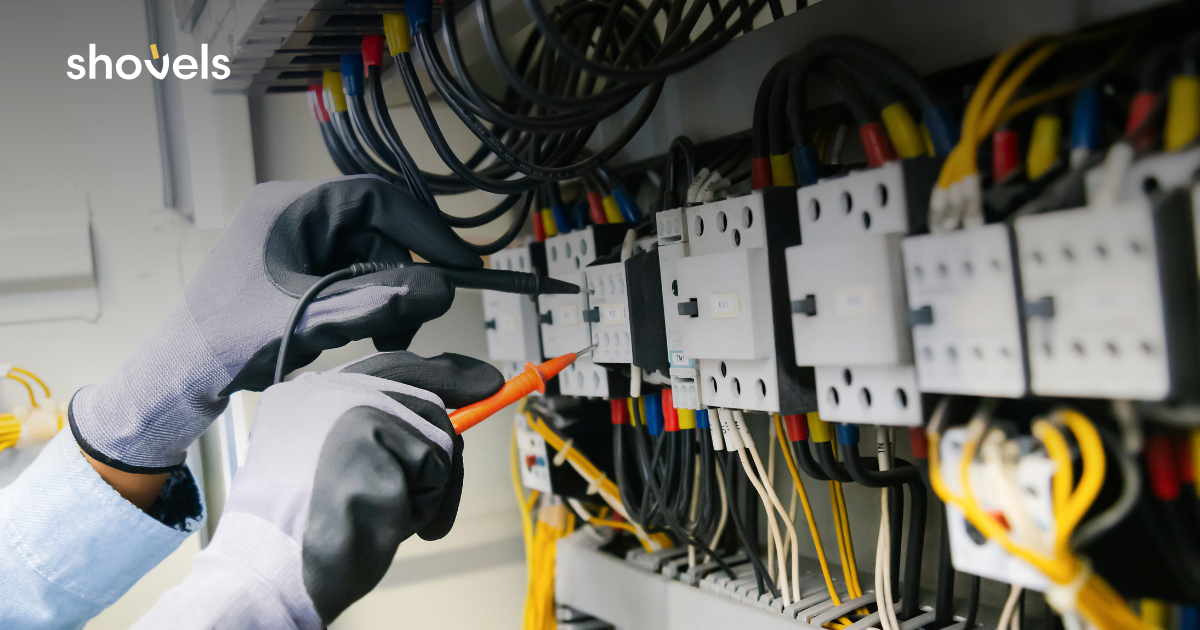

The short answer: replacing a device or fixture with a like-for-like equivalent generally does not require an electrical permit. Adding a circuit, altering wiring inside a wall, or working on the service panel generally does. In most jurisdictions, the deciding factor is not the size of the job, but whether it changes the building's electrical system.
Electrical permits are one of the three main trade permits, alongside mechanical and plumbing permits. They exist because faulty wiring can create a serious fire hazard, and becomes nearly impossible to inspect once the drywall goes back up.
What Electrical Work Can Be Done Without a Permit?
Most Authorities Having Jurisdiction exempt a narrow set of maintenance and like-for-like replacement tasks. Specifics may vary, but the commonly exempt list looks like this:
- Replacing a light fixture with an equivalent fixture on the existing circuit
- Replacing a switch or receptacle with the same type and rating
- Replacing a ceiling fan where an approved fan-rated box is already in place
- Replacing a breaker with an identical rating in an existing panel, in some jurisdictions
- Replacing a thermostat
- Repairing or replacing a cord or plug on an appliance
- Installing plug-in equipment that requires no wiring change
The principle behind the list: if you are restoring or maintaining what already exists rather than changing the electrical system, you probably don't need a permit. The circuit stays the same, the wire stays the same, and nothing gets concealed.
There are two caveats to look out for. First, work that does not require a permit must still meet the locally adopted electrical code. If it fails and causes damage, the permit exemption offers no protection. Second, some jurisdictions require permits even for like-for-like device replacements. These exemptions are common, but they are not universal.
What Electrical Work Always Requires a Permit
The rules are more consistent once the work goes beyond a like-for-like replacement. An electrical work permit is required for:
- Installing a new circuit or extending an existing one
- Replacing, upgrading, or relocating a service panel or subpanel
- Increasing service capacity, for example, from 100 amps to 200 amps
- Adding or moving outlets, switches, or junction boxes
- Any wiring that will be concealed inside a wall, ceiling, or floor
- Running wiring to a detached structure
- Hardwiring appliances or equipment, including EV chargers and hot tubs
- Generator or transfer switch installation
- Solar interconnection and battery storage
- Knob-and-tube or aluminum wiring replacement
- Any work following fire or water damage to wiring
All of these either change the electrical system's capacity and topology or put wiring where it cannot be seen later. That is precisely what inspections are intended to catch.
Here, it's also worth noting that needing a permit and needing a licensed electrician are two separate questions. Some jurisdictions require the homeowner to pull a permit and hire a licensed electrician for service work.
Do You Need a Permit to Upgrade an Electrical Panel?
Yes, always. A panel upgrade is permitted work in every jurisdiction, and it is one of the few electrical jobs with no meaningful exemption path.
Panel work carries the highest stakes in residential electrical. The panel is where utility power enters the building, the conductors are large and unfused on the line side, and errors have consequences that are not recoverable. Inspection covers grounding and bonding, conductor sizing, breaker compatibility with the panel, working clearance in front of the panel, and labeling.
A panel upgrade also usually involves a second party. Increasing service capacity typically requires coordination with the utility for a new meter, service drop, or transformer capacity check, and that step runs on the utility's schedule rather than the building department's. Plan for the utility to be the long pole, not the permit.
This is an increasingly common bottleneck. Heat pumps, EV chargers, induction ranges, and solar-plus-battery systems all increase demand on the electrical panel, and older 100-amp services often cannot handle the additional load. Our analysis of California's changing energy policies shows how electrification requirements are reshaping residential electrical systems, and why panel capacity is often where projects stall.
Do You Need an Electrical Permit for a Shed?
Usually yes, and the requirements are not exactly intuitive. Running power to a detached structure means a new circuit leaving the main building, which is permitted work almost everywhere. It also triggers a specific set of code requirements that do not apply inside the house:
- Burial depth for underground conductors, which varies by wiring method and whether the run is protected by conduit
- Wiring method rating appropriate for a wet or damp location
- Disconnecting means at the detached structure, required where the structure has more than one circuit
- Grounding electrode at the detached structure in many configurations
- GFCI protection for outdoor and damp-location receptacles
Requirements scale depending on what the shed is for. A single lighting circuit for a garden shed is a smaller job than a subpanel for a workshop with tools, but both need a permit.
 Electrical permits are usually necessary for work on detached structures like a shed.
The exception worth knowing: if you are only plugging in a portable cord-connected light or running an extension cord temporarily, no permit applies, because no wiring is being installed. However, this is not a durable solution, and permanent extension cord use is itself a code violation.
Can a Homeowner Pull an Electrical Permit?
It depends on the jurisdiction, and on two separate questions: whether you can pull the permit and whether you can legally perform the work yourself.
Many jurisdictions allow owner-occupants of single-family homes to obtain an electrical permit and complete the work themselves, on the theory that they are assuming the risk on their own property. Where homeowner electrical work is allowed, expect some combination of the following requirements:
- The property must be owner-occupied, not a rental or a flip
- Single-family only, with multifamily requiring a licensed contractor
- Some jurisdictions cap the scope, allowing branch circuits but not service work
- A homeowner affidavit acknowledging responsibility
- The same inspections a contractor would face, sometimes with an added plan review step
Other jurisdictions restrict electrical permits to licensed electrical contractors entirely, with no homeowner path. If a contractor asks you to pull the permit for work they are performing, that shifts code compliance responsibility to you and removes their license and insurance from the permit record. It is often a sign they are not licensed in that jurisdiction. For hired work, the permit belongs in the contractor's name.
How Much Does an Electrical Permit Cost?
Residential electrical permit cost usually falls between $50 and $350, with the method of calculation varying:
- Flat fee for a defined scope, such as a single circuit addition or a panel replacement
- Per-device fee, counting outlets, switches, fixtures, and circuits
- Valuation based, as a percentage of project cost
- Service-size based, priced by amperage for panel and service work
Panel upgrades sit at the higher end and may carry a separate utility fee for the meter or service drop. The permit cost is often not included in the bid. Always review the fee schedule before signing, so you can tell whether the contractor included the permit cost or plans to add it later.
When people ask how much an electrical permit is, the honest answer is that the permit is rarely the expensive part. For panel upgrades, prepare for several thousand dollars in labor, equipment, and utility charges.
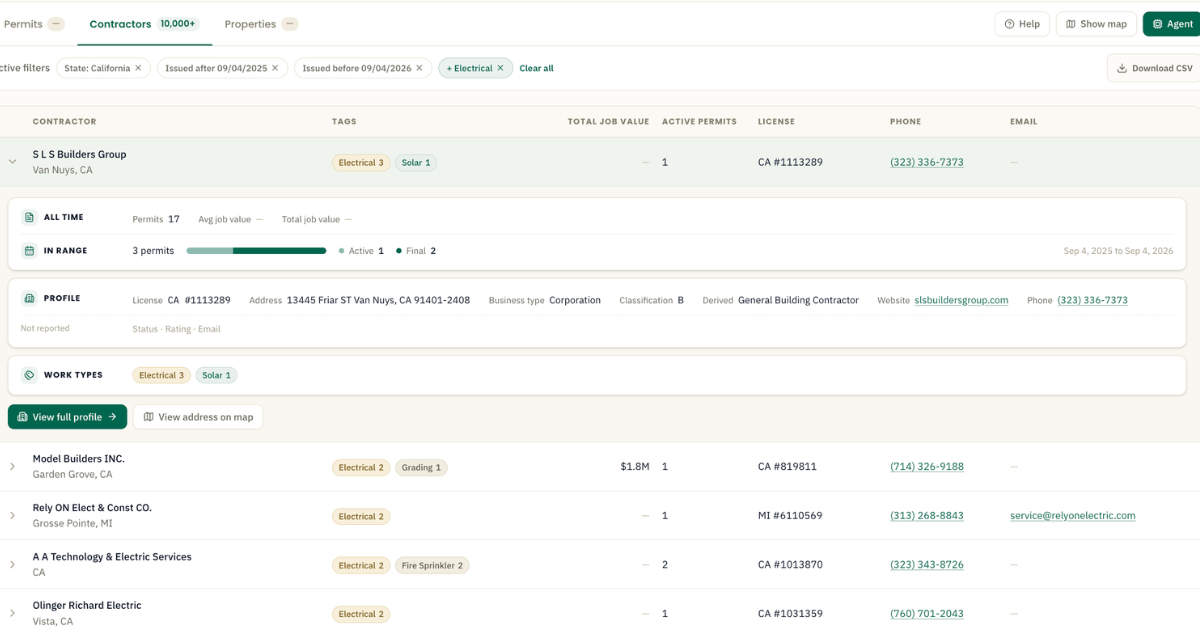
You can explore recent electrical permits in your area with Shovels Online.
How to Check If an Electrical Permit Was Pulled
Verifying the record matters when you are buying a property, confirming your own contractor followed through, or evaluating wiring risk across a portfolio.
- Identify the permitting authority. For electrical specifically, this may not be the city. Confirm whether your AHJ for electrical is the municipality, the county, or a state agency.
- Search by address. Most building departments provide a public permit search. Electrical permits may be listed as their own record type or as a sub-permit under a parent building permit.
- Check the final inspection. An issued electrical permit with no final inspection is an open permit, and open permits complicate sales and refinances.
- Match scope to the work you know about. A permit for a circuit addition does not cover a panel replacement.
- Look for the companion permits. EV chargers, solar, and HVAC changeouts usually generate an electrical permit alongside another trade permit. A solar install with no electrical record is worth a question.
- Watch for older wiring with no permit history. Absence of any electrical permit on a pre-1970s home suggests either that updates were never permitted or that the jurisdiction's records do not go back that far. Both are worth knowing before closing.
Where Electrical Permits Are Issued at the State Level
Most trade permits come from a local building department. Electrical is the most common exception, and several states run it centrally, which is why searches like "MN electrical permit" and "state of Minnesota electrical permit" show such heavy volume. The pattern to know:
- Minnesota handles electrical permitting and inspection through the Department of Labor and Industry, with electrical inspectors assigned by area, though some larger cities run their own electrical inspection programs.
- Colorado issues electrical permits through the State Electrical Board under the Department of Regulatory Agencies (DORA) for jurisdictions that have not adopted their own electrical inspection program.
- Washington runs electrical permitting through the Department of Labor and Industries (L&I), except in cities and counties that operate their own electrical programs, including Seattle.
- Montana and Idaho both administer electrical permitting through state programs covering areas without local electrical inspection.
The consequence is practical. In these states, the city building department may issue your building permit while a state agency issues and inspects the electrical permit for the same project. Applying to the wrong agency is the most common avoidable delay. Confirm which agency covers the specific address before filing, since coverage is determined by whether that local jurisdiction has its own program.
Frequently Asked Questions
- What electrical work can be done without a permit?
-
Typically like-for-like replacement and maintenance: swapping a light fixture, switch, or receptacle for an equivalent device on an existing circuit, replacing a thermostat, or repairing an appliance cord. Anything that adds a circuit, alters wiring inside a wall, or touches the service panel requires a permit. Exempt work must still meet code.
- Do I need a permit to upgrade my electrical panel?
-
Yes, in every jurisdiction. Panel and service upgrades are permitted work with no exemption path, because the inspection verifies grounding, bonding, conductor sizing, and working clearance. Capacity increases also require utility coordination for the meter and service drop, which usually takes longer than the permit itself.
- Can a homeowner pull an electrical permit?
-
In many jurisdictions, yes, if you own and occupy a single-family home. Restrictions are common: some jurisdictions allow branch circuit work but not service work, some require an affidavit, and some restrict electrical permits to licensed contractors entirely. Multifamily and rental properties are usually excluded.
- Do I need an electrical permit for a shed?
-
Yes, in most cases. Running power to a detached structure creates a new circuit and triggers requirements for burial depth, wet-location wiring, GFCI protection, and often a disconnect and grounding electrode at the shed. Plugging in a portable light with no wiring installed needs no permit, but permanent extension cord use is a code violation.
- How much is an electrical permit?
-
Most residential electrical permits run $50 to $350. Jurisdictions price them as a flat fee, per device, by project valuation, or by service amperage. Panel upgrades sit at the high end and may carry a separate utility fee that is not part of the permit cost.
- How do I apply for an electrical permit?
-
Confirm which agency has jurisdiction first, since several states issue electrical permits through a state agency rather than the city. Then submit an application describing the scope, typically listing circuits, devices, and service size. Simple residential work is often issued over the counter the same day, while service changes and commercial work go through plan review.
- Can I do my own electrical work legally?
-
In many jurisdictions an owner-occupant can perform electrical work on their own single-family residence, with a permit and inspection. This varies significantly, and some jurisdictions require a licensed electrician for all electrical work regardless of ownership. Service and panel work is the most commonly restricted category.
- What happens if electrical work was done without a permit?
-
It becomes unpermitted work, which usually surfaces during a home inspection, appraisal, or title search. Resolving it means applying for a retroactive permit and allowing inspection, which can require opening walls to expose concealed wiring. Unpermitted electrical work is also a common insurance issue after a fire, since the carrier may investigate whether the wiring was inspected.
- Do I need a permit to install an EV charger?
-
Yes. A hardwired EV charger is a new dedicated circuit and requires an electrical permit, and many installs also need a panel evaluation or upgrade to support the load. A plug-in Level 1 charger using an existing outlet needs no permit, though the circuit should be verified as adequate.