

A zoning report is a due diligence document that sets out a property's zoning classification, the uses that classification permits, the dimensional rules that apply to it, and whether the buildings currently on the site actually comply with those rules. It answers one question that a title search cannot: is what is standing here legal, and what could legally replace it?
Zoning reports show up almost entirely in commercial transactions. Lenders order them, buyers rely on them, and the answers inside them regularly change deal terms.
Key Takeaways
- A zoning report documents compliance, not just classification. Naming the district is the easy part. The valuable finding is whether existing improvements conform to it.
- Lenders commonly require one. Securitized commercial loans in particular treat a zoning report as standard closing diligence.
- Legal nonconforming status is the finding that moves deals. A property can be legal today and impossible to rebuild as-is after a loss.
- A zoning report is not a survey and not a title report. The three cover different risks and are usually ordered together.
- Pending zoning changes matter as much as current rules. A rezoning working its way through a planning commission can change what a site is worth.
- Shovels Decisions tracks those pending actions. Rezonings, variances, and land use approvals from local government meetings, which is the section of a zoning report that goes stale fastest.
What Is a Zoning Report?
A zoning report compiles a property's zoning status from the governing municipal code and from the jurisdiction's own records, then states whether the property complies. A complete report typically covers:
- Zoning district and classification, with the citation to the controlling ordinance section
- Permitted uses, plus conditionally permitted and prohibited uses
- Current use conformance, stating whether the existing use is conforming, legal nonconforming, or in violation
- Dimensional requirements, meaning setbacks, height limits, lot coverage, floor area ratio, and density
- Parking and loading requirements, and whether the site meets them
- Entitlements of record, including variances, special permits, site plan approvals, and conditions attached to them
- Open violations or code enforcement actions
- Certificates of occupancy on file, and whether they match the current use
- Pending or proposed zoning changes affecting the property
- Rebuild rights, meaning what could be reconstructed if the improvements were destroyed
The last two items are where a report earns its fee. Everything above them describes the present. Those two describe your exposure.
What a Zoning Report Is Not
Three documents are grouped together in commercial diligence and they get confused constantly.
A title report covers ownership and encumbrances: who holds title, what liens exist, what easements run with the land. It is silent on whether the building violates a setback.
A survey, typically an ALTA/NSPS land title survey, establishes physical facts: boundaries, improvement locations, encroachments, easement locations on the ground. It shows you where the building sits, but it does not tell you whether that location is permitted.
A zoning report interprets the regulatory overlay against those physical facts. It is the only one of the three that answers whether the property is legally compliant with local land use rules.
They are complementary. A survey showing a building 8 feet from the property line is only meaningful once a zoning report establishes that the required setback is 10 feet.
Why Legal Nonconforming Status Matters
This is the concept that makes zoning reports worth ordering, and the one most often misunderstood.
A property is legal nonconforming when it complied with the rules in force at the time it was built but does not comply with current rules. Zoning changed underneath it. The use or the structure was grandfathered rather than made illegal.
Legal nonconforming status is stable until it is disturbed. What disturbs it varies by ordinance, and typically includes:
- Destruction above a threshold. Many ordinances allow reconstruction only if damage falls below a stated percentage of value. Above it, the rebuild has to comply with current zoning.
- Abandonment or discontinuance. A nonconforming use interrupted for a defined period, often six or twelve months, can lose its protection.
- Expansion or intensification. Enlarging a nonconforming structure or intensifying a nonconforming use usually requires discretionary approval.
- Change of use. Switching to a different nonconforming use is generally not permitted as of right.
The practical consequence: a fully leased building generating reliable income can be a property you are not allowed to rebuild the same way. That is an insurance question, a financing question, and a valuation question at once. It is also invisible without a zoning report.
If a property is out of compliance and never had protection, the path back usually runs through a zoning variance or a conditional use permit, both of which are discretionary and neither of which is guaranteed.
Did you know? The pending zoning changes section of a zoning report is the one that goes stale fastest, because it depends on what local planning commissions and city councils did last month.
Shovels Decisions reads local government meeting records and surfaces rezoning approvals, variances, and land use actions as they happen, so you can see what is moving in a jurisdiction rather than waiting for the next report cycle.
Zoning Reports for Commercial Real Estate
A commercial real estate zoning report is helpful in a number of recurring situations. The report is generally ordered by the buyer or borrower, and the cost sits in closing diligence alongside the survey and the environmental report.
Acquisition diligence. The buyer needs to confirm the in-place use is legal, that parking is compliant, and that the intended business plan is permitted. A value-add plan that assumes a use conversion lives or dies on the permitted use table.
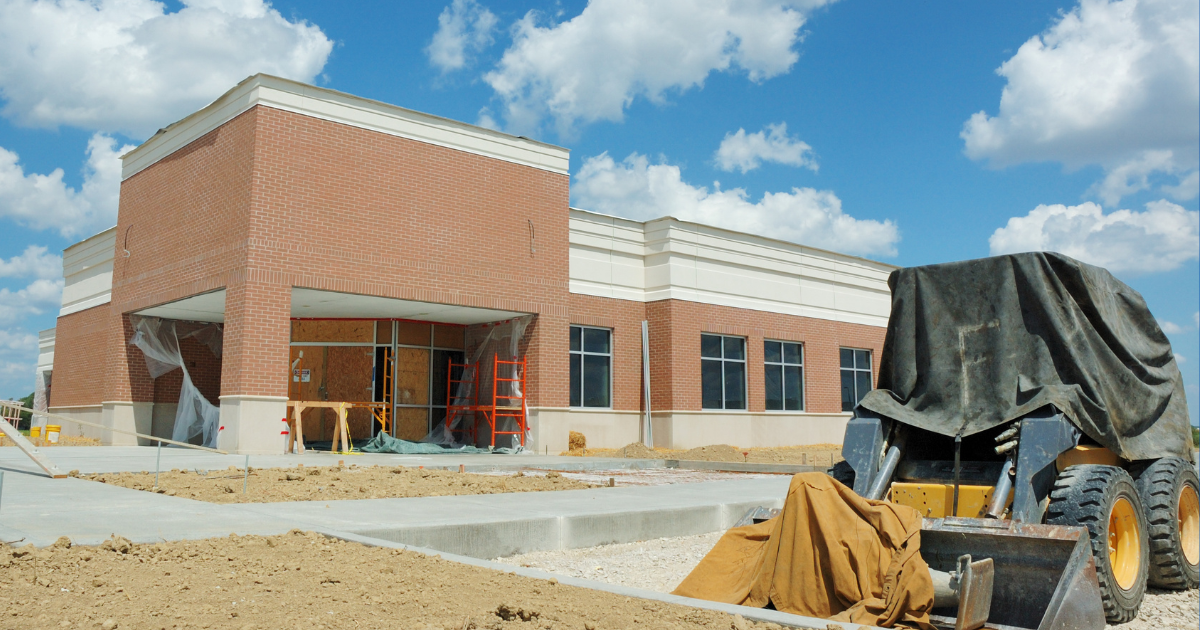 Zoning reports are often pulled for commercial properties and provide many advantages.
Financing. Lenders on commercial mortgages, and especially originators of loans destined for securitization, generally require a zoning report as a closing condition. Where a property is legal nonconforming, the lender will usually also require ordinance and law coverage on the insurance policy to address rebuild exposure.
Title insurance zoning endorsements. Title underwriters issuing a zoning endorsement need a documented zoning determination to rely on. The zoning report supplies it.
Development and repositioning. Before pursuing land entitlement on a site, you need a baseline of what is permitted as of right, because that establishes what the entitlement process actually has to win.
Portfolio review. Owners running compliance checks across multiple assets order reports in batches, often prompted by a refinancing or a sale process.
Who Produces Zoning Reports
Zoning reports come from a small set of specialist third-party vendors rather than from the municipality itself. Planning and Zoning Resources (PZR) is the best known, and searches for a "PZR zoning report" are effectively searches for the category. NV5, formerly Bock and Clark, is another established provider, and a number of regional firms and zoning attorneys produce them as well.
Products generally come in two tiers:
- A desktop or summary report compiled from the published ordinance and available online records. Faster and cheaper, with no municipal confirmation.
- A full or verified report that includes direct written or documented confirmation from the zoning authority, along with copies of underlying records such as certificates of occupancy and prior approvals.
Lenders on institutional transactions typically want the verified tier, because the point of the report is that a third party has confirmed the interpretation with the Authority Having Jurisdiction rather than reading the code and forming a view.
Expect two to four weeks for a verified report, driven almost entirely by how quickly the municipality responds. Rush service exists and costs more. Where a jurisdiction is slow or unresponsive, that timeline is the single most common cause of a delayed commercial closing.
How to Look Up Zoning for a Property Yourself
A vendor report is the right answer for a financed transaction. For early screening, or to answer what your property is zoned for, you can usually start the process yourself.
- Identify the parcel. Start from the assessor parcel number rather than the street address. Addresses are ambiguous across jurisdictional boundaries and parcels are not.
- Find the zoning map. Most municipalities publish a zoning map, frequently as a GIS layer alongside parcel data. This gives you the district designation.
- Read the district regulations. Pull the zoning ordinance section for that district and read the permitted use table and the dimensional standards together. The use table alone is not enough, because a permitted use on an undersized lot may still be unbuildable.
- Check the overlays. Historic districts, flood overlays, wildland-urban interface zones, and corridor overlays layer additional requirements on top of the base district and are easy to miss.
- Pull the permit and approval history. Prior variances, special permits, and site plan conditions run with the property. So do open violations. Permit history is the fastest way to see what has been approved and what was never closed out.
- Check for pending changes. Look at recent planning commission and city council agendas for the parcel and its immediate area. A pending rezoning nearby can matter as much as one on the site itself.
- Call the zoning office for anything consequential. Municipal staff interpretation is what a verified report ultimately captures. If a decision rests on the answer, get it from them.
Step 5 is where unpermitted work surfaces. An addition with no permit on file is both a compliance problem and a signal that the recorded square footage may be wrong.
Shovels Decisions reads local government meeting records and surfaces rezonings, variances, and land use approvals as jurisdictions act on them. See how it works or look up permit and approval history for any address for free with Shovels Online.
Frequently Asked Questions
- What is a zoning report?
-
A zoning report is a due diligence document stating a property's zoning district, the uses that district permits, the applicable dimensional requirements, and whether the existing improvements comply. It also covers entitlements of record, open violations, pending zoning changes, and rebuild rights. Lenders on commercial transactions commonly require one before closing.
- What is included in a property zoning report?
-
Zoning district and ordinance citation, permitted and conditional uses, a conformance determination for the current use, setbacks, height, lot coverage, floor area ratio, density, parking requirements, variances and special permits of record, certificates of occupancy, open code violations, pending zoning amendments, and a statement of what could be rebuilt after a casualty.
- How much does a zoning report cost?
-
Verified commercial zoning reports generally run from several hundred dollars for a simple single-parcel property to a few thousand for complex or multi-parcel sites. Desktop summaries cost less. Rush turnaround carries a premium. Price is driven mostly by parcel count and how cooperative the municipality is.
- How long does a zoning report take?
-
Two to four weeks is typical for a verified report, and the municipality's response time is almost always the constraint rather than the vendor's. Desktop reports can be produced in a few days. Build the municipal response window into your closing timeline rather than assuming the vendor controls it.
- Do lenders require a zoning report?
-
Commonly, yes, for commercial mortgages. Originators of loans intended for securitization generally treat a zoning report as standard closing diligence, alongside the survey and environmental assessment. Where the property is legal nonconforming, the lender will usually also require ordinance and law insurance coverage.
- What is the difference between a zoning report and a survey?
-
A survey establishes physical facts: boundaries, where improvements sit, encroachments, and easement locations. A zoning report interprets the regulatory rules that apply to those facts and states whether the property complies. A survey shows a building 8 feet from the line. The zoning report tells you the required setback is 10 feet.
- What does legal nonconforming mean on a zoning report?
-
It means the property complied with zoning when it was built but does not comply with current rules, and is grandfathered rather than illegal. That protection can be lost through destruction above an ordinance threshold, abandonment of the use, expansion, or change of use. It is the finding most likely to affect financing and insurance.
- How do I find out the zoning of a property without ordering a report?
-
Identify the parcel by APN, locate the district on the municipal zoning map or GIS layer, then read that district's permitted use table and dimensional standards in the zoning ordinance. Check for overlay districts, review the permit and approval history for prior variances and open violations, and confirm anything consequential with the zoning office directly.
- Can zoning change after I buy a property?
-
Yes. Municipalities amend zoning regularly, through both site-specific rezonings and broader ordinance updates. An existing legal use generally becomes legal nonconforming rather than illegal when that happens, but rebuild rights and expansion options can narrow. Tracking planning commission and council activity in your markets is the only way to see it coming.