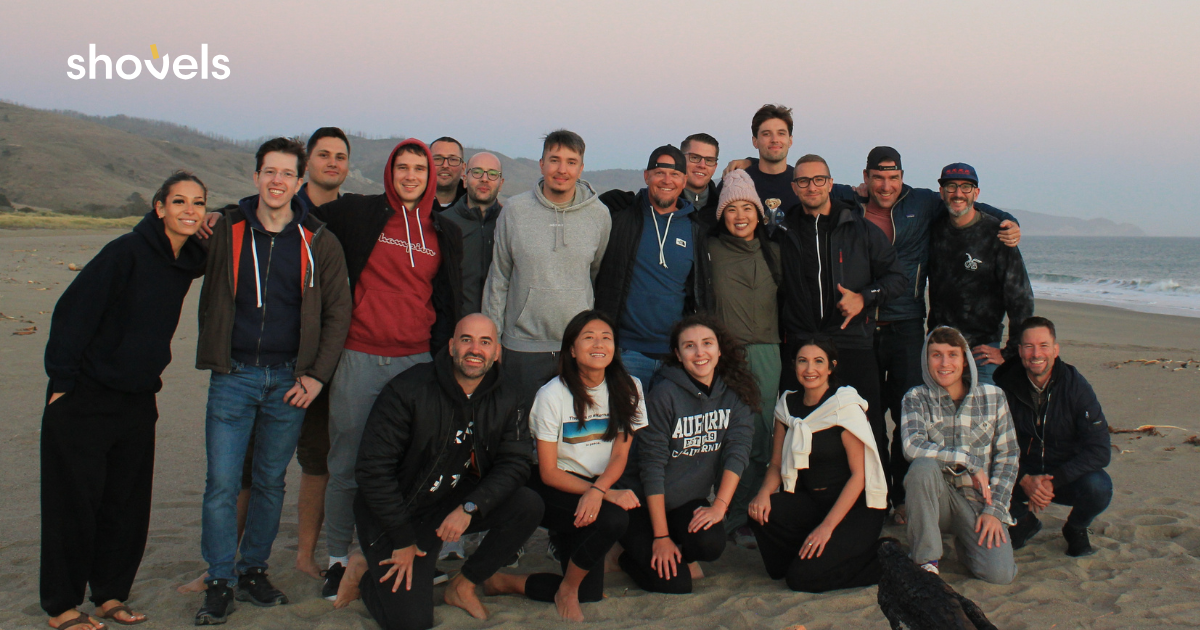
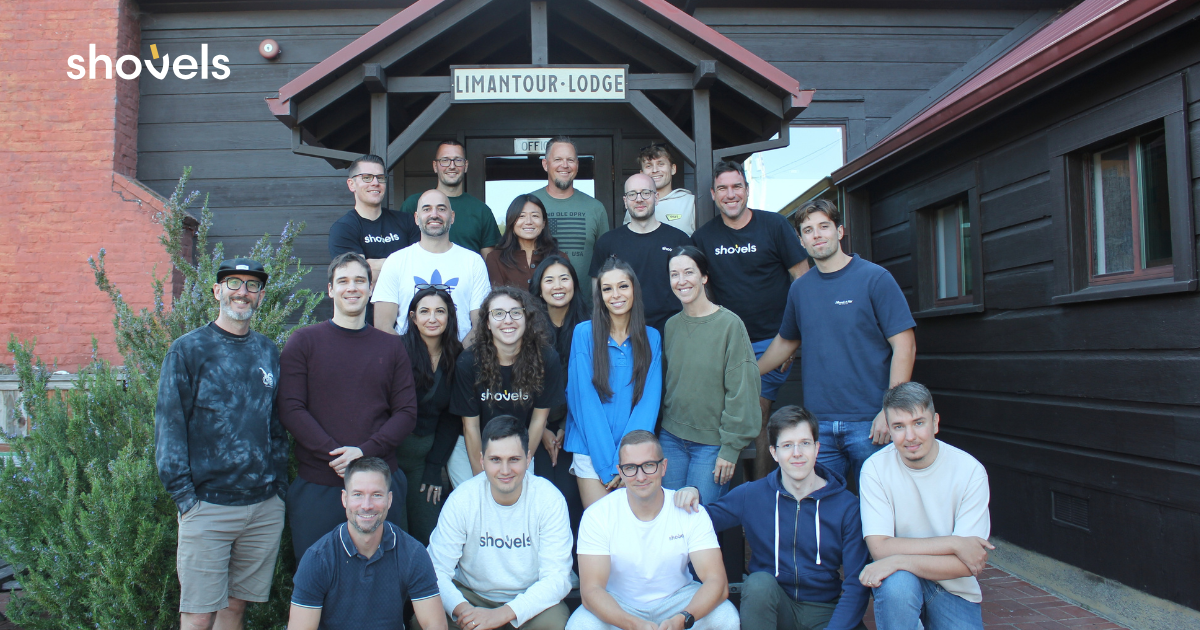
The Shovels team spent a week together in Northern California for our annual summit. Usually, we're spread across the US, Croatia, and Slovenia, so a week in the same place counts for more than any single agenda item. To say this summit was a success is a dramatic understatement.
We met in San Francisco on Sunday. On Monday we split up for “choose your adventure,” and each car took its own route north: e-bikes through the Marin Headlands, a stop above the Golden Gate Bridge, fresh oysters, the Cypress Tree Tunnel. Everyone eventually ended up at Limantour Lodge in Point Reyes, our home for the next three nights. That evening Ryan kicked off the summit, and we welcomed a few new teammates who were meeting the team in person for the first time.
The hackathon
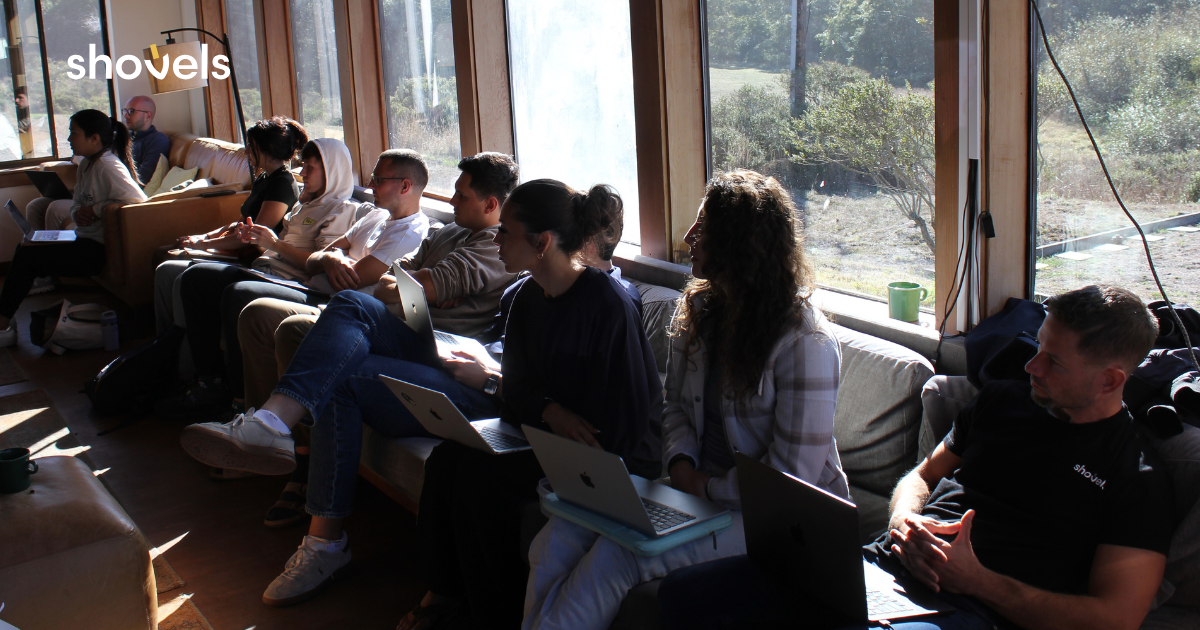
The center of the week was our second hackathon, and the first one open to the whole company. The rules were simple. Build something that isn't on any product roadmap. Mix the commercial and engineering teams. Put regular work aside for two days. Demo something that works on Wednesday night, because slides alone don't count. No judges, no prizes.
All 21 of us formed ten teams, most of them pairing someone from the commercial side with an engineer, people who don't usually build side by side. Teams that finished early were free to start a second (or third) project, which a few did. From Tuesday morning to Wednesday evening the lodge became a coworking space, broken up by morning runs, lunchtime hikes, and games of volleyball.
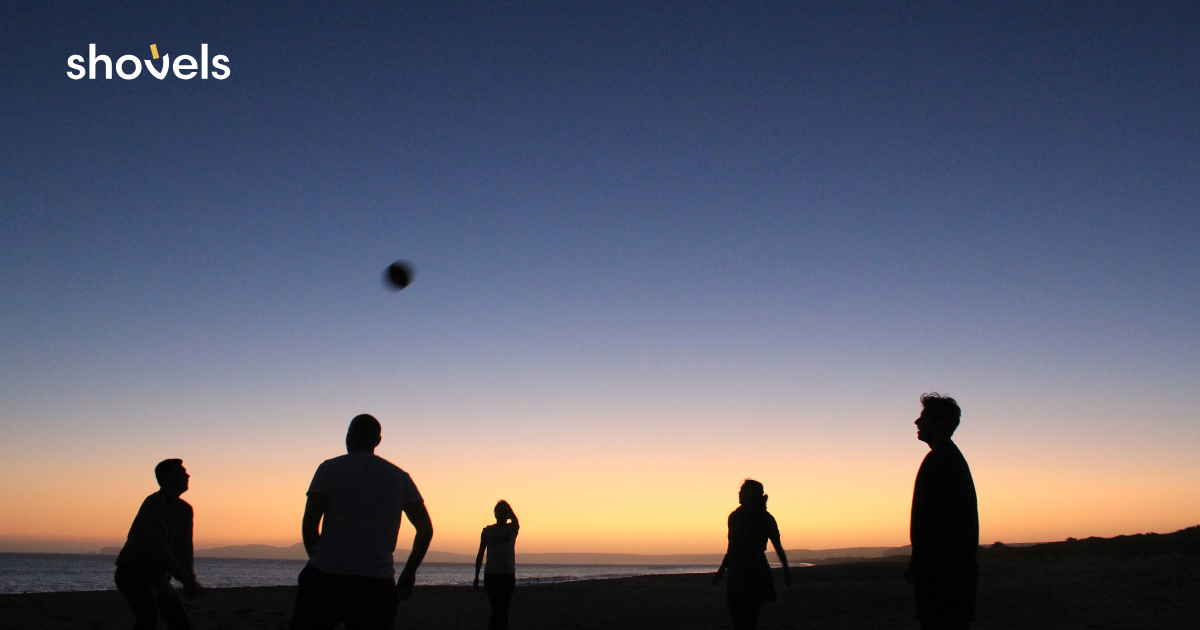
Tuesday night we drove down to the beach for a bonfire, played volleyball into the sunset, and finished the night back at the lodge with cards and a guitar sing-along with Neil Young, Tom Petty, John Denver, the Beatles, and more.
Every team demoed their project after dinner on Wednesday, and the level of polish and completeness surprised all of us. Hackathon demos often come with a story about what the team meant to build, where it pivoted, and what got in the way. Here, more than ten projects reached demo night, nearly all of them working software. Several projects are a QA pass away from going live.
Here are a few of the projects:
- Permit Time Machine (Marko and Ruoji) predicts how long a permit will take to move from file to issue date, with a confidence range.
- Do I Need a Permit? (Božidar and Nicole) takes an address and a project description and predicts whether the work needs a permit.
- AHJ lookup (Gašper, Ian, and Ryan) takes an address and returns the authority having jurisdiction, with a confidence score.
- Front ROW (Matt and Luka Kacil) pulls right-of-way and fiber permits from public works portals, a source we don't fully cover today.
- Unpermitted work (Benjamin and Tori) flags properties where the parcel record shows improvements that no permit explains.
Other projects built public property pages showing a home's permit and contractor history, linked city council decisions to the permits that follow them, spotted new businesses before they open, let customers bring their own territory maps into Shovels, built a free tool for local governments, and turned our weekly department updates into something you can listen to and question by voice. Teams are now deciding which projects to ship publicly, so stay tuned for a follow-up!
Wrapping up and fireside chats
On Thursday we packed up the lodge and drove back to San Francisco for a working day at Industrious near Union Square. We walked through Shovels OS, set up AI agents for each department, and hosted two fireside chats. Jenny Song, founder and CEO of Infilla, builds permitting software for city planning and building departments. Liz Watty is the director of PermitSF, San Francisco's citywide effort to make permits faster and simpler. Both talked with us about the permitting challenges they work on every day.
We closed the week with dinner on the Embarcadero, a closing circle by the bay, and a hunt for a foosball table that ended at a bar with a table and no ball. Huge thanks to Nicole, who kept 21 people fed and supplied through more grocery runs than anyone counted, and to Neil (Ryan's neighbor), who cooked for us all week. We came home with new projects, new friends, and a team that feels a lot closer than it did just a week earlier.