
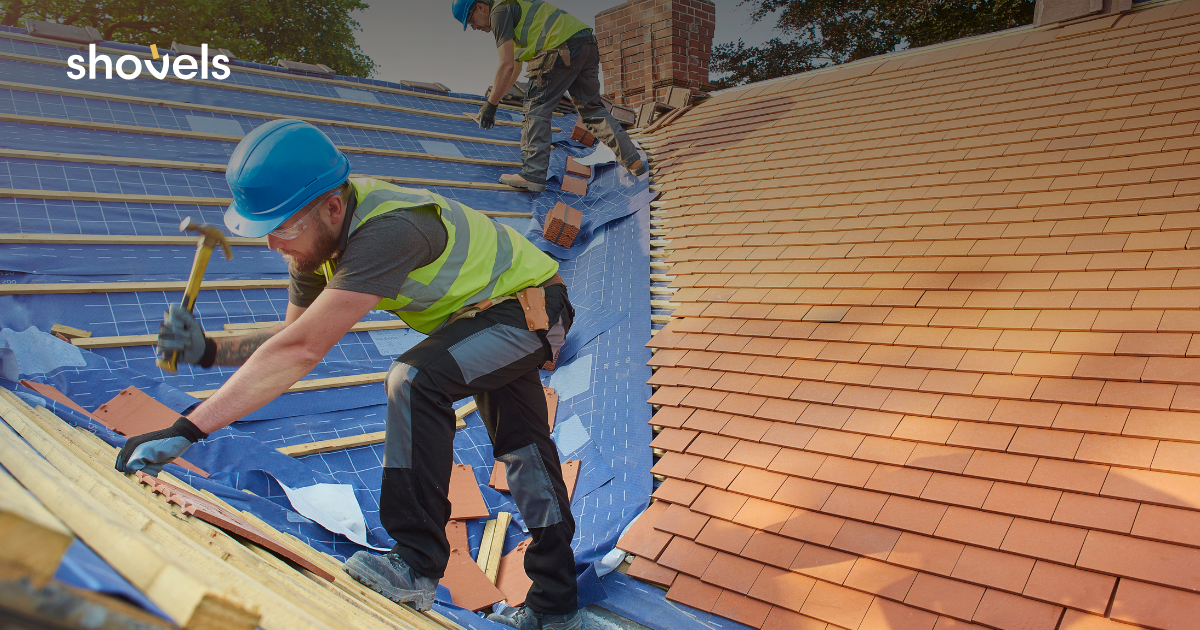

The simple answer is yes. In almost every US jurisdiction, you do need a permit to replace a roof. A full tear-off and re-roof is structural work on the building envelope, and building departments treat it that way, even when the new shingles look identical to the old ones.
The exceptions are narrow, and they cover small repairs rather than replacements. Understanding where that line sits is what keeps a reroof from becoming a problem at resale or at claim time.
Do You Need a Permit to Replace a Roof?
Yes. A roof replacement permit is required for full tear-off and re-roof work in essentially every jurisdiction that issues building permits. The permit exists because a reroof is not a cosmetic job. It exposes the roof deck, and what happens next determines whether the building stays watertight for the next 20 years.
The permit and inspection process verifies a specific set of things:
- Decking condition. Once the old covering is off, rotted or delaminated sheathing has to be replaced rather than covered.
- Layer count. Most codes allow a maximum of two layers of asphalt shingles. A third layer means a full tear-off.
- Underlayment and ice barrier. Cold-climate jurisdictions typically require an ice barrier extending a set distance up from the eave.
- Drip edge and flashing. Current residential code requires drip edge along roof eaves and rakes, so many older homes need it added when the roof is replaced.
- Fastening. Code specifies nail count, placement, and length to help prevent roof failure in high winds.
Questions about roof permits come up often because reroofing feels like routine maintenance. But it's a job that replaces a primary weather barrier.
Roofing Permit Requirements by Scope of Work
If you're preparing to replace or repair your roof, it's important to know which types of roofing work require permits. Requirements generally break down like this:
Almost always requires a permit:
- Full tear-off and replacement of the roof covering
- Overlay of a new layer over an existing single layer
- Any replacement or repair of roof sheathing or structural framing
- Changing roof covering type, for example, asphalt shingle to metal or tile
- Adding or relocating roof penetrations, skylights, or vents
- Structural changes to roof pitch or framing
Often exempt, subject to local threshold:
- Patch repairs below a stated area, commonly one square (100 square feet) or a small percentage of total roof area
- Replacing a handful of blown-off or damaged shingles
- Resealing or repairing flashing without disturbing the covering
- Gutter replacement, in most jurisdictions
The area threshold is where requirements vary. Some jurisdictions define it by square footage, others by the percentage of the roof affected, and others by whether the work reaches the sheathing. A repair that is exempt in one city may require a permit two towns over.
One rule is generally consistent: a full roof replacement requires a permit, even if the new roofing uses the same material. Replacing three-tab asphalt shingles with architectural shingles still counts as a roof replacement.
Roofing Permits in Florida
Florida is the clearest example of a state with additional requirements beyond base code. Under the Florida Building Code's "25 percent rule," repairing or replacing more than 25 percent of a roof within a 12-month period requires the entire roofing system, not just the affected section, to meet current code. Later amendments exempted some roofs built to the 2007 Florida Building Code or newer standards.
Miami-Dade and Broward counties are specifically part of the High-Velocity Hurricane Zone, where roofing products must meet additional approval and attachment requirements. A material approved elsewhere in Florida is not necessarily approved for use in these counties.
Roofing Permits in California
California codes add two layers to the base requirement. Title 24 energy standards require certain reroofing projects to meet cool-roof reflectance standards, depending on the roof slope and climate zone. Properties in designated Fire Hazard Severity Zones and the Wildland-Urban Interface may also require Class A fire-rated roof assemblies.
If you live in Los Angeles, note that residents often apply to the wrong Authority Having Jurisdiction. Properties inside city limits are permitted by the City of Los Angeles, and unincorporated areas go through Los Angeles County. Sending an application to the wrong jurisdiction can waste weeks, even months.
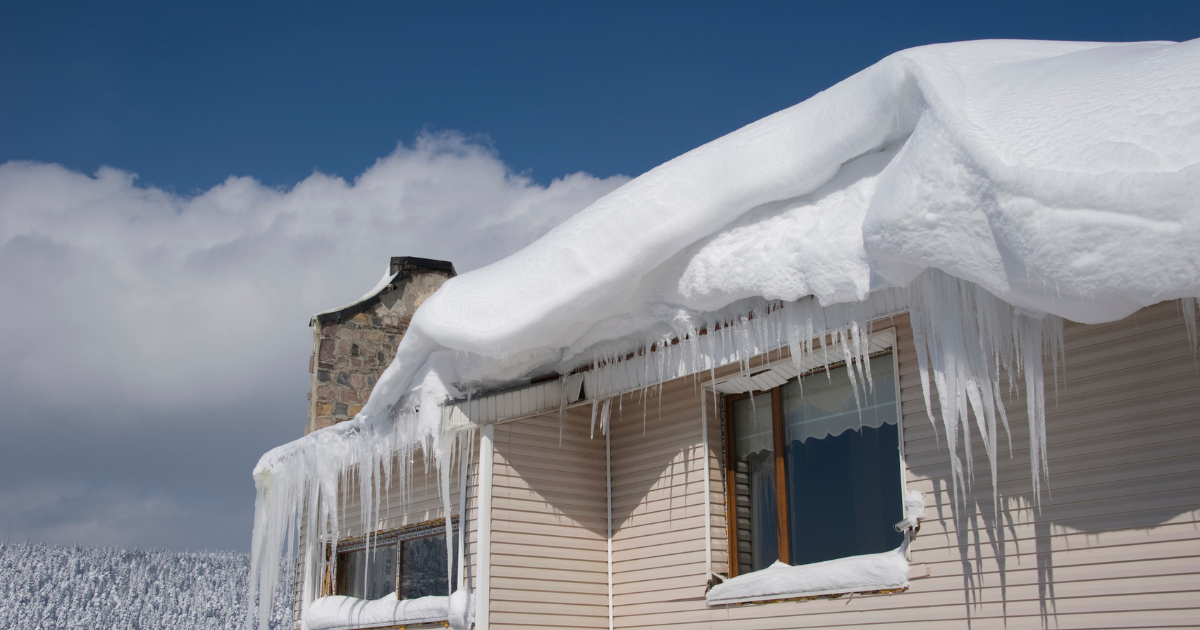 Many cold climate places have strict ice barrier requirements.
Roofing Permits in Minnesota
Minnesota is also worth mentioning. Hail damage drives frequent reroofing across Minnesota, particularly in the Twin Cities metro. Most municipalities require a permit for roof replacement, and inspectors pay particular attention to ice-barrier requirements because of the climate. Residential roofing contractors must also be licensed through the Minnesota Department of Labor and Industry, separate from the local permitting process.
Requirements and enforcement vary by municipality, even between neighboring suburbs. Always confirm the rules with the city where the property is located.
How Much Does a Roofing Permit Cost?
Residential roofing permit cost typically runs from around $100 to $500, though the range is wide and the calculation method varies:
- Flat fee per residential reroof, common in smaller jurisdictions
- Valuation-based, calculated as a percentage of the stated project cost, which is the most common method
- Per square, based on roof area in 100-square-foot units
- Plan review fee added separately on commercial or structural work
When budgeting for a roof-replacement permit, account for costs beyond the initial fee. These may include reinspection fees if the work fails its first inspection, a separate structural permit if decking or framing needs to be replaced, and expedited processing fees where available.
Commercial reroofing permits typically cost more and may require sealed drawings, adding design expenses to the permit fee.
Permit fees are set by the jurisdiction, not by the roofer. Check the current fee schedule before signing a contract. This way, you can confirm that the permit cost is included in the bid.
Can You Pull Your Own Roofing Permit?
Sometimes it's better to pull your own roofing permit, but it's worth considering your options before you do.
Most jurisdictions allow an owner-occupant of a single-family home to pull a permit for work on their own residence. If you are genuinely doing the work yourself, the process is straightforward. You can apply and receive a permit.
Complications arise when a roofing contractor asks the homeowner to pull the permit. Doing so makes the homeowner responsible for code compliance and inspections, while leaving the contractor's licensing and insurance information out of the permit record.
Treat that request as a warning sign. A contractor unwilling to pull a permit under their own name may be unlicensed locally, uninsured, or reluctant to create a public record of the work. Some jurisdictions therefore issue roofing permits only to licensed contractors.
If you hire a contractor, the permit should generally be issued in the contractor's name.
Why It Matters Whether Your Roofer Pulls the Permit
That leads us to our next point. Homeowners usually search specifically for roofing companies that pull permits, because a permitted roof and an unpermitted roof are different assets.
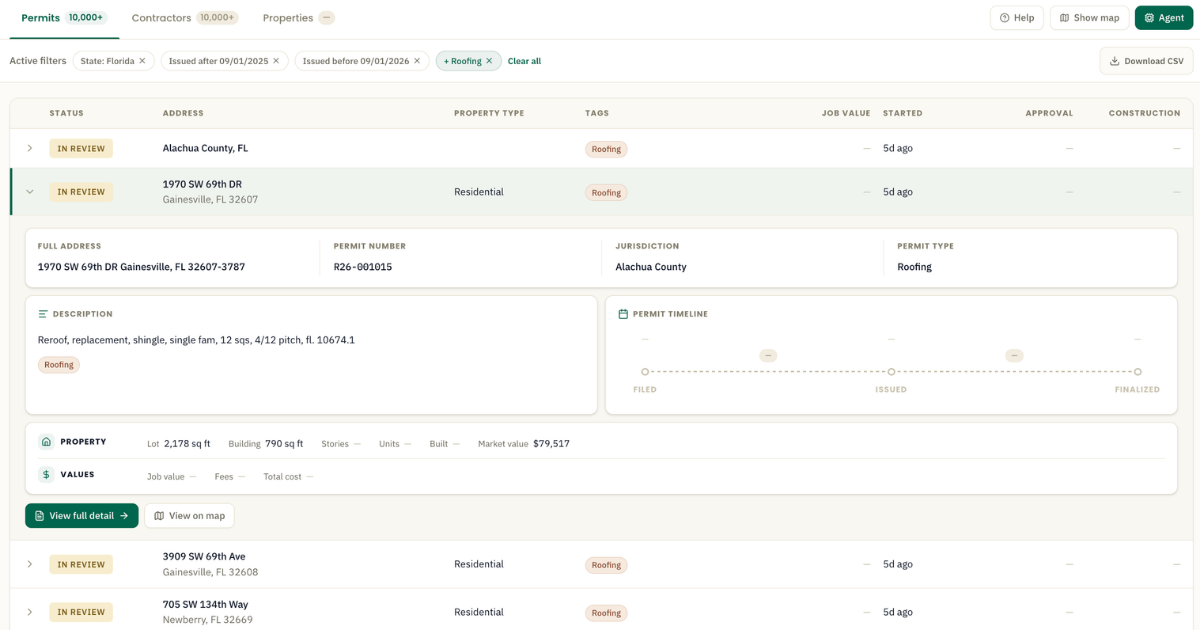
You can check for roofing permits and contractors in your area using Shovels Online
At resale. Unpermitted work surfaces during inspection, appraisal, or title review. A roof with no permit on file invites questions about whether the decking was ever inspected, and buyers discount for that uncertainty or ask for a retroactive permit before closing.
At claim time. Insurers increasingly scrutinize roof age and condition. If a roof fails in a wind or hail event and there is no permit record showing when it was replaced or that it passed inspection, substantiating the claim gets harder.
For code compliance. The inspection provides independent verification that the number of roofing layers, fastening, and flashing meet code. Without it, you are relying on the roofer's word.
For recourse. A permit connects the licensed contractor to the work through a public record, giving you documentation to reference if something goes wrong.
Before hiring anyone, confirm in writing who will pull the permit, then verify that it was issued rather than simply taking the contractor's word for it.
How to Check Whether a Roofing Permit Was Pulled
Whether you are buying a house, verifying your own contractor, or evaluating a portfolio, the process is the same.
- Identify the right jurisdiction. Determine whether the property is governed by a city, county, or unincorporated county authority. The jurisdiction is not always clear, especially near municipal boundaries.
- Search the permit record by address. Most building departments maintain a public portal. But coverage and ease of access can vary. Older records are frequently missing or available only in paper form.
- Check the permit status, not just its existence. An issued permit that never passed final inspection is an open permit, and an open permit can present its own problems.
- Confirm the scope matches the work. For example, a permit for a repair does not cover a full replacement.
- Note the issue date. For insurance and due diligence purposes, the permit date is the most defensible proxy for roof age available.
- Check for a companion permit if applicable. Solar reinstalls, skylights, or structural repairs may appear as separate records. If the reroof happened alongside a solar removal and reset, there should be a solar permit too.
Looking up records through a building department works well for a single property, but if you need to check multiple addresses or an entire portfolio, you may need a more scalable solution, especially when some jurisdictions lack online portals.
Frequently Asked Questions
- Do I need a permit to replace my roof?
-
Yes, in nearly every US jurisdiction. Full roof replacement requires a building permit because the work exposes the roof deck and involves the building's primary weather barrier. Inspectors verify decking condition, layer count, underlayment, flashing, and fastening. A small number of jurisdictions exempt very small repairs, but not replacements.
- Do you need a permit for a roof replacement if the new roof matches the old one?
-
Yes. Like-for-like replacement is not an exemption. The new roof has to meet current code, and code requirements, including drip edge, ice barrier, and fastening standards, may have changed since the original roof was installed. Matching materials does not change the permit requirement.
- Do I need a permit to replace my roof myself?
-
Yes, the permit requirement applies regardless of who does the work. Most jurisdictions do allow an owner-occupant of a single-family home to pull the permit themselves. Be aware that pulling the permit makes you the responsible party for code compliance and inspection.
- Do I need a permit to replace roof shingles only?
-
If you are replacing the shingles across the roof, yes, that is a roof replacement. If you are replacing a small number of damaged shingles, many jurisdictions exempt repairs below a stated area threshold, often around 100 square feet. Check the local threshold, since it varies and some jurisdictions measure it as a percentage of total roof area instead.
- How much is a permit for roof replacement?
-
Most residential roofing permits fall between $100 and $500. Some jurisdictions charge a flat fee, most calculate it from project valuation, and some price it per 100 square feet of roof area. Commercial reroofs cost more and often require sealed drawings. Your building department publishes a current fee schedule.
- How do I find roofing permits in Minnesota?
-
Minnesota permits are issued and held municipally, so the record sits with the city where the property is located rather than with the state. Start with the city building department's permit search. Because requirements and record systems differ between neighboring suburbs, checking multiple properties across the metro usually means checking multiple portals, or using a service that aggregates them.
- What happens if a roof was replaced without a permit?
-
The work is unpermitted, and it typically surfaces during a home inspection, appraisal, or title search. Resolving it usually means applying for a retroactive permit and allowing an inspection, which can require opening up sections of the roof to verify what is underneath. It can also complicate an insurance claim if the roof is implicated in a loss.
- Does a roof permit expire?
-
Yes. Most roofing permits expire if work does not start within a set window, commonly six months, or if inspections lapse for an extended period. An expired permit with no final inspection leaves an open permit on the property record, which comes up at sale or refinance.
- How can I tell how old a roof is?
-
The most reliable public evidence is the roofing permit record. Permit issue dates give a defensible date for when the roof was last replaced, which is why insurers and property data teams use permit history rather than visual inspection to estimate roof age at scale.