

This article was originally published on ReZone, now part of Shovels. ReZone AI tracks real estate-related city decisions nationwide.
Welcome to In the Zoning’s first weekly update. In each update, we’ll provide a selection of interesting zoning, land use, and building code changes that are happening right now across the United States.
We choose proposals and changes to highlight by the following criteria:
- Actionability: How useful is this information to a real estate developer or investor?
- Scale: How big is the change? Is it a neighborhood-wide planning change or simply a spot rezoning?
- Relevance: Does this change hint at a greater trend?
Here’s what interested us this week:
- Affordable Housing Regulatory Breaks | Portland, Oregon
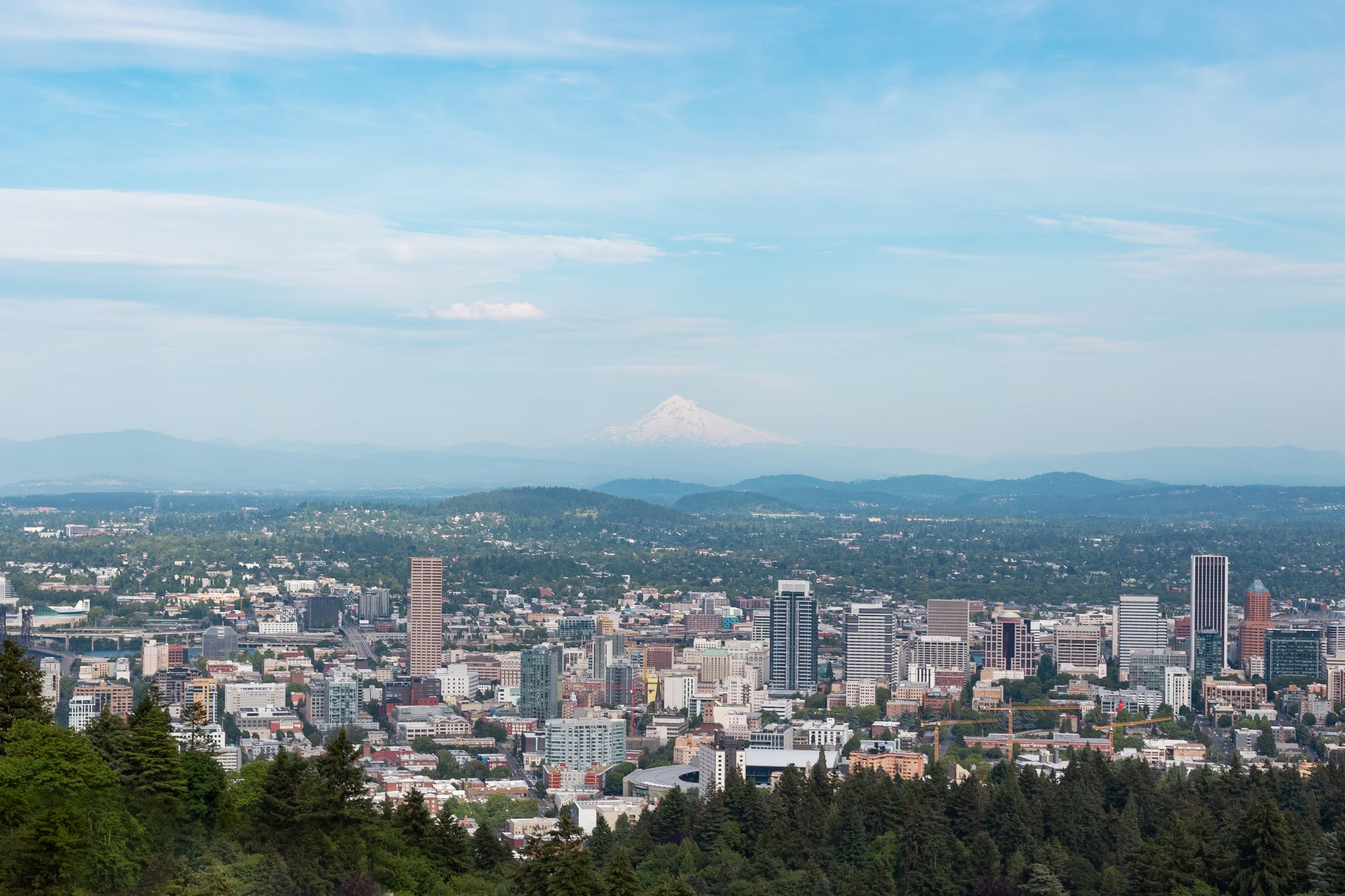
After several years of declining housing production—and a worsening housing shortage—the City of Portland, Oregon is rolling back some regulatory overhead for affordable housing projects. These include limiting design review and eliminating the ecoroof requirement.
Why it matters: For years, local governments have imposed increasingly strict—and unfunded—requirements on housing developments. The end result has been less housing production. It remains to be seen if this Portland change is the beginning of a broader shift.
- Permitting Student Housing in Office Zones | Ann Arbor, Michigan
Like many college towns, Ann Arbor has a severe lack of student housing. This regulatory change would allow several categories of student housing—fraternities, sororities, and “cooperative student housing” on office-zoned parcels.
Why it matters: Ann Arbor is not alone in having too much office and not enough housing—particularly housing that works for students. This rule change seems to be a win-win: more people are brought into sagging office neighborhoods, and the most high-nuisance student uses (Greek organizations) are given an outlet away from single-family neighborhoods.
- Major Neighborhood Rezoning | San Antonio, Texas
San Antonio recently enacted a major zoning change, allowing mixed-use residential in a currently light industrial / commercial area just east of downtown. In total, 427 acres were rezoned around East Houston Street, North New Braunfels Avenue, and the Union Pacific Railroad tracks. A full (very long) list of rezoned properties can be found here.
Why it matters: This zoning change paints San Antonio’s path of growth to the east into a currently low-density residential—and low-slug commercial—neighborhood.