

This article was originally published on ReZone, now part of Shovels. ReZone AI tracks real estate-related city decisions nationwide.
In a surprising turn of events, city councils don’t seem to like data centers. Lets not forget that we are talking about bodies of power that can take 2+ yrs to approve a fourplex due to “noise complaints”.
Data centers are loud, consume a lot of water, strain the local grid, and apparently they attract terrorists???
Here’s a few more objections we’ve heard:
- Diesel-generator air pollution
- Few permanent jobs, big tax breaks
- Large land footprint
- Heat-island & waste-heat concerns
And then there’s the “typical” new development concerns such as construction traffic, opportunity-cost fears, governance gaps, lack of transparency, overall carbon footprint, etc.
This leads cities like Atlanta, GA, to take strong anti-development approaches to limit data centers. For example, they now require Special Use Permits (SUP) for data centers. Thus, mandating detailed disclosures on water consumption, conservation, and energy consumption. They also prohibit data centers within half a mile of a high-capacity transit stop.
Another example is Phoenix, AZ, which recently approved city-wide comprehensive regulatory framework for data centers. Similar to Atlanta, the amendment requires a Special Permit, limits data centers to a few zones, and prohibits data centers within a half mile of a high-capacity transit station.
The Positives
On the other hand, there’s also a lot of positives that come with data centers. They bring large investments, reliable property-tax reliable, an ongoing expansion pipeline (operators need to refresh hardware every 3-5 yrs, keeping contractors busy), and digital-economy clustering effect.
In a recent Thesis Driven article, we covered some new developments:
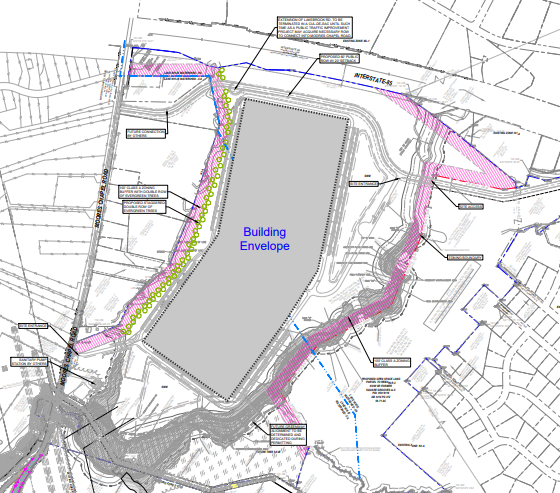
(1) Charlotte, NC approves Data Center Expansion
Charlotte approved a site plan amendment to previously approved I-2 (CD) zoning for a 156-acre site, allowing an increase from 1,5M SF to 3M SF of telecommunications and data storage facilities in up to two phases.
The site is close to I-85, Wilkinson Boulevard, and Charlotte-Douglas International Airport. Some of the key advantages stated are job creation and economic development.
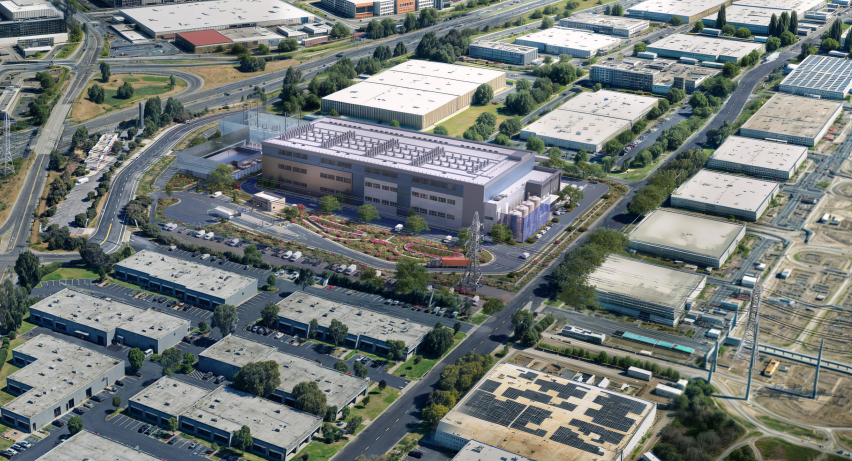
(2) Hayward, CA OKs Three-Story, 310k SF Data Center Campus
The planning commission approved a 310,000 SF Data Center Campus located on 11 acres on the edge of town in its existing industrial zone. The single-owner project exceeds local and state sustainability requirements and promises job creation and economic growth for the community.
A generator yard with 28 diesel generators, an on-site substation and switching yard, and a direct evaporative cooling system as well as recycled-water-ready irrigation are included as well.
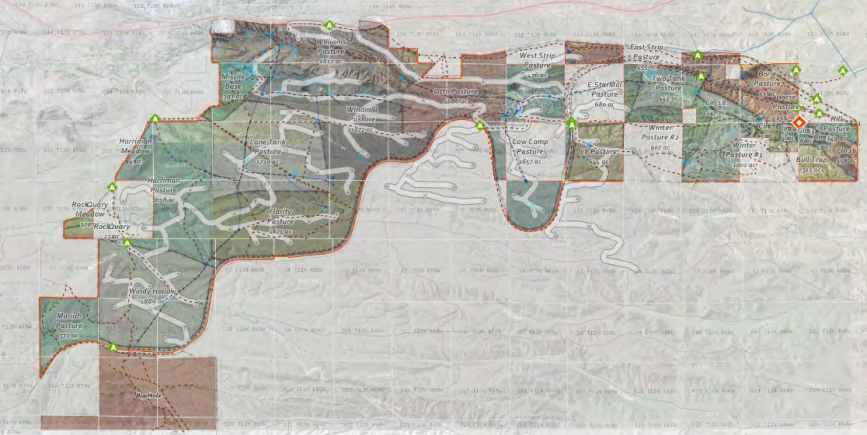
Belvoir Ranch is a 19,032-acre ranch located roughly 8 miles west from Cheyenne, WY. The new master plan organizes the ranch into four “character areas:” Recreation, Energy, History, and Opportunity.
The “opportunity” zone is prioritized for potential data center development, capitalizing on its vast, undeveloped acreage. Currently, the site hosts ~100 wind turbines, is surrounded by the Union Pacific Railroad tracks, and is used mainly for recreation.
The key hurdles stopping potential data center development include the lack of necessary infrastructure such as water, sewer, and high-capacity power lines.
While city ownership makes a large-scale development of this kind somewhat easier, the site currently lacks necessary infrastructure like water, sewer, and high-capacity power lines.